
History of Fatigue Management

Fatigue management became an important road safety topic because investigations into major road crashes repeatedly showed that many accidents were caused not by vehicle failure, but by tired drivers losing concentration, falling asleep, or reacting too slowly.
Early Recognition
In the early days of transportation, especially during the industrial revolution and expansion of railways and trucking, operators often worked extremely long hours with little rest. Drivers, train operators, and pilots were expected to continue working despite exhaustion.
Over time, authorities noticed patterns in serious crashes:
- Many accidents occurred late at night or early morning.
- Drivers involved often had long working hours.
- Some drivers admitted to briefly falling asleep before impact.
Growth of Commercial Transportation
As commercial trucking expanded worldwide in the 20th century, fatigue-related crashes increased significantly. Long-distance drivers frequently drove overnight, for excessive hours, without proper breaks, and under pressure to meet delivery schedules.
Research later confirmed that fatigue can impair driving almost like alcohol intoxication.
Major Studies and Findings
Road safety researchers discovered that:
- Sleep deprivation reduces reaction time.
- Fatigue affects judgment and decision-making.
- Microsleep (brief unintended sleep lasting a few seconds) can occur without warning.
- Being awake for about 17–19 hours can impair performance similarly to alcohol impairment.
These findings pushed governments and transport organizations to introduce FATIGUE MANAGEMENT practices.
DEFINITION OF FATIGUE AND DRIVER FATIGUE (IN DRIVER SAFETY CONTEXT)
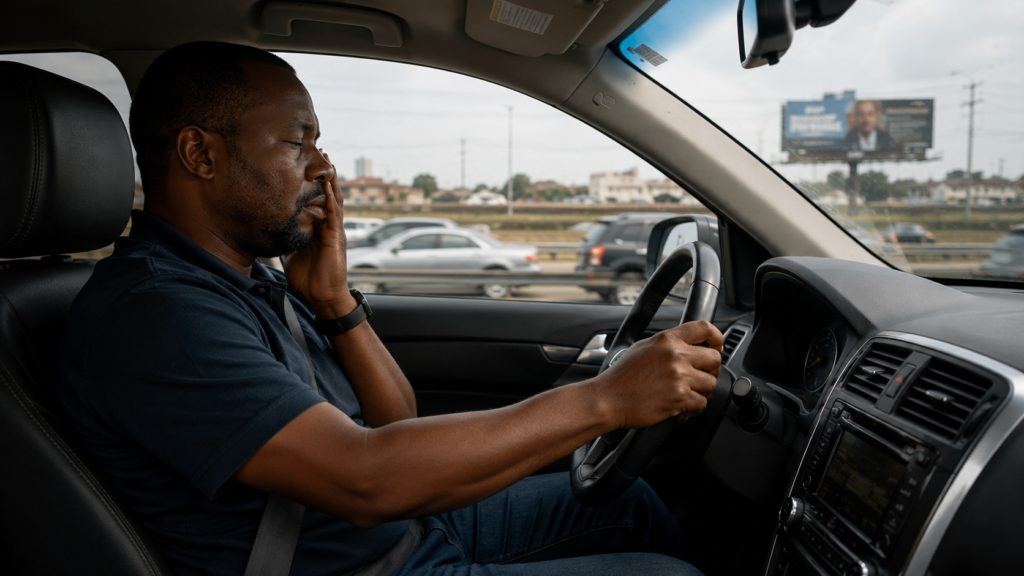
Fatigue is a state of physical and/or mental exhaustion that reduces a person’s ability to perform work safely and effectively.
Driver Fatigue is a condition in which a driver becomes mentally or physically tired to the point that safe driving performance is reduced.
In driving, fatigue affects:
- Alertness,
- Concentration,
- Coordination,
- Judgment,
- Reaction time,
- Decision-making ability.
A fatigued driver may:
- Miss road signs,
- Drift out of lane,
- React slowly to hazards,
- Make poor decisions,
- Fall asleep while driving.
Common causes of driver fatigue are:
- Lack of sleep,
- Long driving hours,
- Stress,
- Illness,
- Monotonous roads,
- Night driving,
- Poor health,
- Alcohol or drug use,
- Heavy workload.
Common Signs of Driver Fatigue
Physical Signs
- Frequent yawning,
- Heavy eyelids,
- Head nodding,
- Blurred vision,
- Body weakness.
Mental Signs
- Difficulty concentrating,
- Forgetting recent events,
- Missing exits or road signs,
- Slow reaction.
Driving Behaviour Signs
- Drifting between lanes,
- Sudden braking,
- Inconsistent speed,
- Tailgating,
- Hitting rumble strips.
What is Fatigue Management?
Fatigue management is the process of identifying, controlling, and reducing fatigue-related risks to ensure that people remain alert and capable of performing their duties safely.
In transportation, fatigue management involves systems, policies, training, and practices designed to prevent drivers from operating vehicles while tired.
Objectives of Fatigue Management
The main objectives are to:
- Prevent fatigue-related accidents,
- Protect drivers and passengers,
- Improve driver alertness,
- Promote proper rest and sleep,
- Ensure safe work scheduling,
- Reduce injuries, deaths, and property damage.
Key Elements of Fatigue Management
- Adequate Rest and Sleep: Drivers must have:
- Sufficient sleep before trips,
- Proper rest breaks,
- Recovery time after long shifts.
Most adults require about 7–9 hours of sleep daily.
- Working Hour Control: Organizations establish limits on:
- Daily driving hours,
- Shift duration,
- Overtime,
- Consecutive night shifts.
This helps prevent excessive exhaustion.
- Journey Planning: Trips should be planned considering:
- Distance,
- Traffic,
- Weather,
- Rest stops,
- Driver condition,
- Night driving risks.
- Driver Education and Training: Drivers are trained to:
- Recognize fatigue signs,
- Understand sleep importance,
- Avoid risky behaviour,
- Report tiredness early.
- Health and Wellness Management: Good health supports alertness. Organizations may encourage:
- Healthy diet,
- Exercise,
- Stress management,
- Medical checks,
- Proper hydration.
- Supervisor and Management Responsibility: Fatigue management is not only the driver’s responsibility. Management should:
- Avoid unrealistic schedules,
- Encourage reporting of fatigue,
- Promote safety culture,
- Monitor driver fitness.
Causes of Driver Fatigue
Driver fatigue can be as a result of the following factor:
- Sleep-Related Causes
- Insufficient sleep,
- Poor sleep quality,
- Sleep disorders.
- Work-Related Causes
- Long hours,
- Shift work,
- Night driving,
- Tight deadlines.
- Lifestyle Causes
- Poor diet,
- Stress,
- Alcohol,
- Drug use.
- Environmental Causes
- Hot cabin conditions,
- Long straight roads,
- Poor ventilation,
- Monotonous driving conditions.
Dangers of Fatigue Driving: Below are some of the dangers of fatigue driving:
Fatigue can lead to:
- Fatal crashes,
- Loss of vehicle control,
- Reduced hazard awareness,
- Delayed braking,
- Poor judgment,
- Microsleep incidents.
A fatigued driver may not even realize how impaired they are.
Fatigue Management Controls for Drivers
Some practical fatigue controls include:
- Sleep adequately before trips,
- Take regular breaks,
- Avoid driving during normal sleeping hours,
- Share driving where possible,
- Stop immediately when tired,
- Avoid alcohol and sedating drugs,
- Stay hydrated,
- Report fatigue without fear.
Important Safety Principle
“No delivery, appointment, or schedule is more important than human life.” Drivers should never continue driving when fatigue affects safe operation.
Conclusion
Fatigue management became important because fatigue-related crashes caused serious injuries and deaths across the transport industry. Fatigue reduces a driver’s alertness, judgment, and reaction time, making driving dangerous.
Fatigue management, therefore, refers to all measures taken to identify, prevent, and control fatigue risks so that drivers can operate vehicles safely and responsibly.